Arthur Rayner Dyer (1858–1925)
Alderman and three-time Mayor of Winchester, and resident of St Giles Hill
Summary:
Arthur Rayner Dyer was one of Winchester’s leading early twentieth‑century civic figures: a successful provision merchant, long‑serving councillor and alderman, and Mayor of Winchester for three consecutive terms from 1919 to 1921, during the difficult years immediately following the First World War. He and his family were closely associated with St Giles Hill, where he lived at Palm Hall, Northbrook Avenue, and where he and his wife are buried in Giles Hill Graveyard.
Early life and family background:
Arthur Rayner Dyer was born in 1858 at Braintree, Essex. He was the son of John Dyer, a master grocer of Bocking, and Hannah Dyer (née Rayner). The family’s long‑standing involvement in the grocery trade in Essex provides a clear background to Arthur’s later career as a provision merchant in Winchester.
Marriage and children:
On 17 January 1882, at St Michael’s Church, Chester Square, Westminster, Arthur married
Elizabeth Rayner. The couple later settled in Winchester and had at least five children,
confirmed by census and probate records:
-
Arthur Francis Rayner Dyer (1883–1917), later Captain in the King’s African Rifles
-
John Dyer (died 1911)
-
Gertrude H. Dyer
-
Edna C. Dyer
-
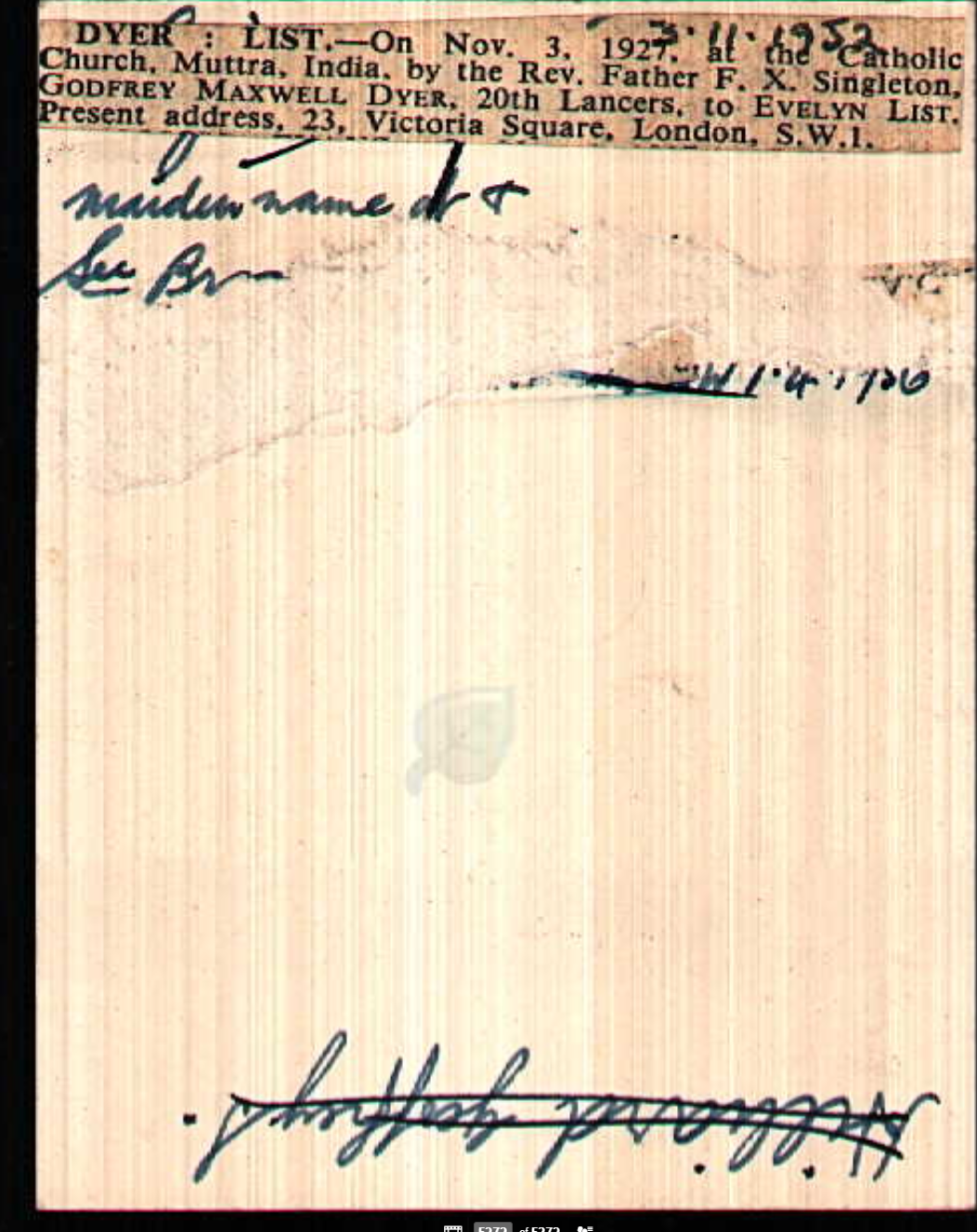
Godfrey M. Dyer
The Dyer family moved from Essex to Winchester between the 1881 and 1891 censuses, beginning a long
association with the city and with St Giles Hill in particular.
Life in Winchester:
By 1891 the family were living at St George’s Lodge in the parish of St Faith, Winchester. By 1911 they had moved to Palm Hall on St Giles Hill, a substantial house overlooking the city. These addresses place the family firmly within the Giles Hill community and explain their later burial in the nearby cemetery.
Occupation:
In earlier records, Arthur appears as a grocer; later sources describe him as a provision merchant. This suggests that he operated a successful wholesale or retail food business serving Winchester and the surrounding area, continuing the family’s grocery tradition from Essex.
Civic career:
Arthur Dyer’s civic service in Winchester was long and steady. He is recorded as a
City Councillor for the parish of Chilcomb in Warren’s Directory of 1900, and later as an
Alderman of Winchester. His most prominent role was as Mayor of Winchester
for three consecutive terms, from 1919 to 1921.
These years immediately followed the First World War and were marked by the demobilisation of returning
soldiers, acute housing shortages, economic instability, and ongoing public health pressures. Although
detailed council minutes for his mayoralty are not readily available online, the period is consistently
described as a challenging one for local government. His repeated re‑election as mayor indicates the
confidence placed in him by his fellow councillors.
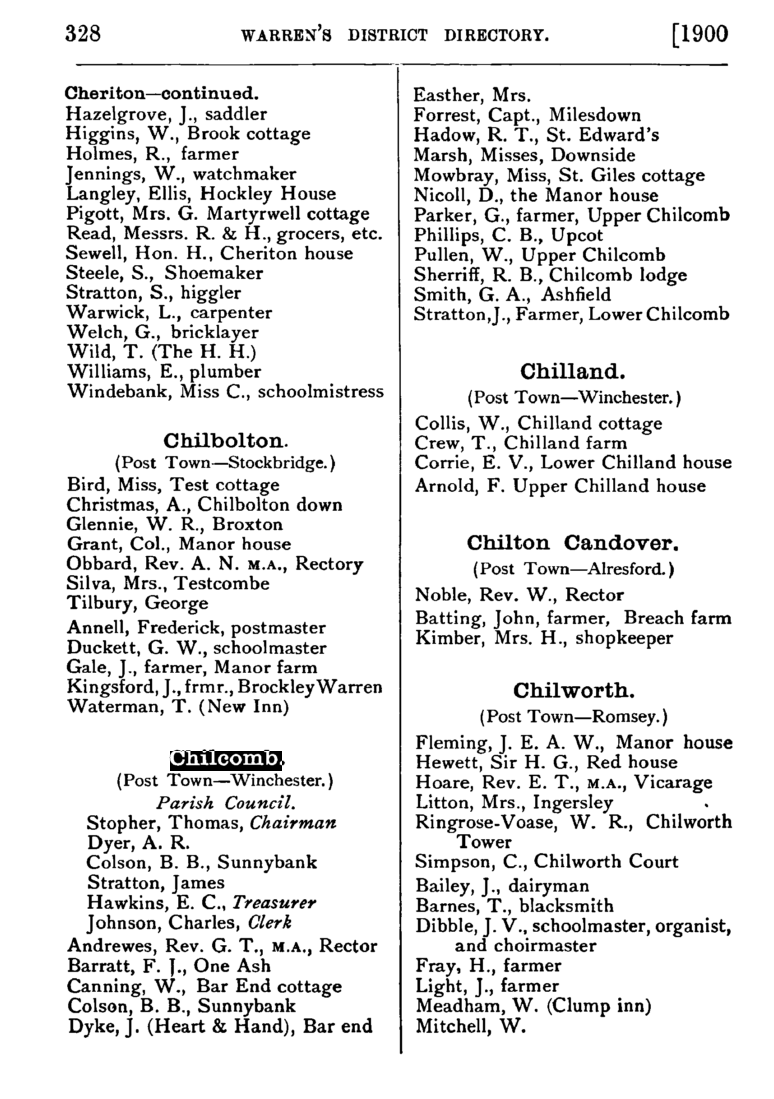
Warrens directory
Family tragedy:
The Dyer family’s story intersects with global events through Arthur and Elizabeth’s eldest son,
Captain Arthur Francis Rayner Dyer (1883–1917). He served with the 3rd King’s African Rifles in the East African Campaign during the First World War.
Captain Dyer was killed on 11 July 1917 and is buried in Dar es Salaam War Cemetery. He is commemorated on several rolls of honour, including the Masonic Roll of Honour (1921), a 1940 First World War roll of honour scroll, and at St Lawrence Church, Winchester. His widow, Elsie M. Dyer, is recorded as living at 6 Grafton Road, Winchester.
This loss, occurring only a few years before Arthur’s own mayoralty, must have cast a long shadow over the family’s public and private life.
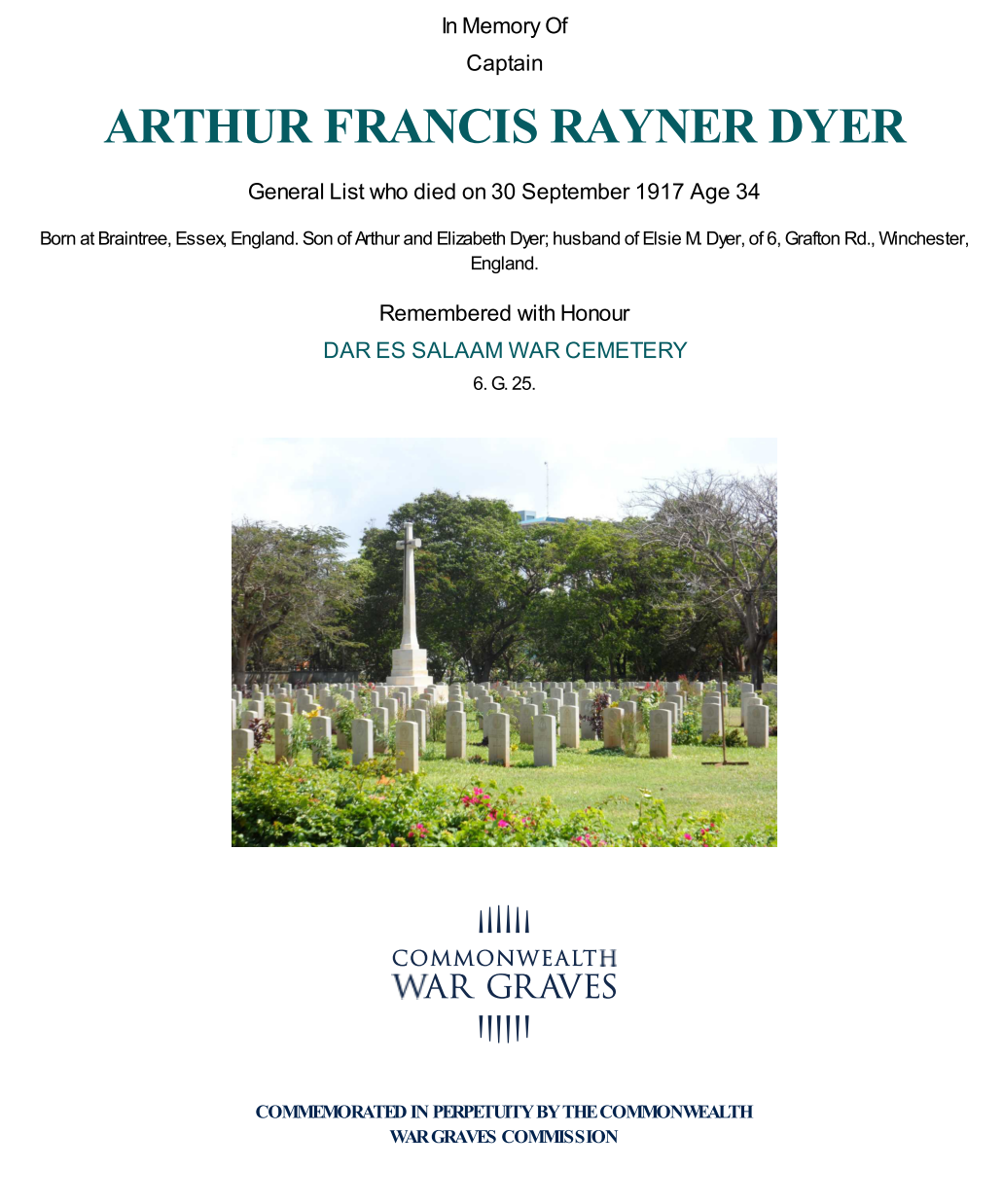
Arthur Francis Rayner Dyer CWG record
Death and burial:
Probate records give Arthur Rayner Dyer’s date of death as 2 September 1925, aged 67.
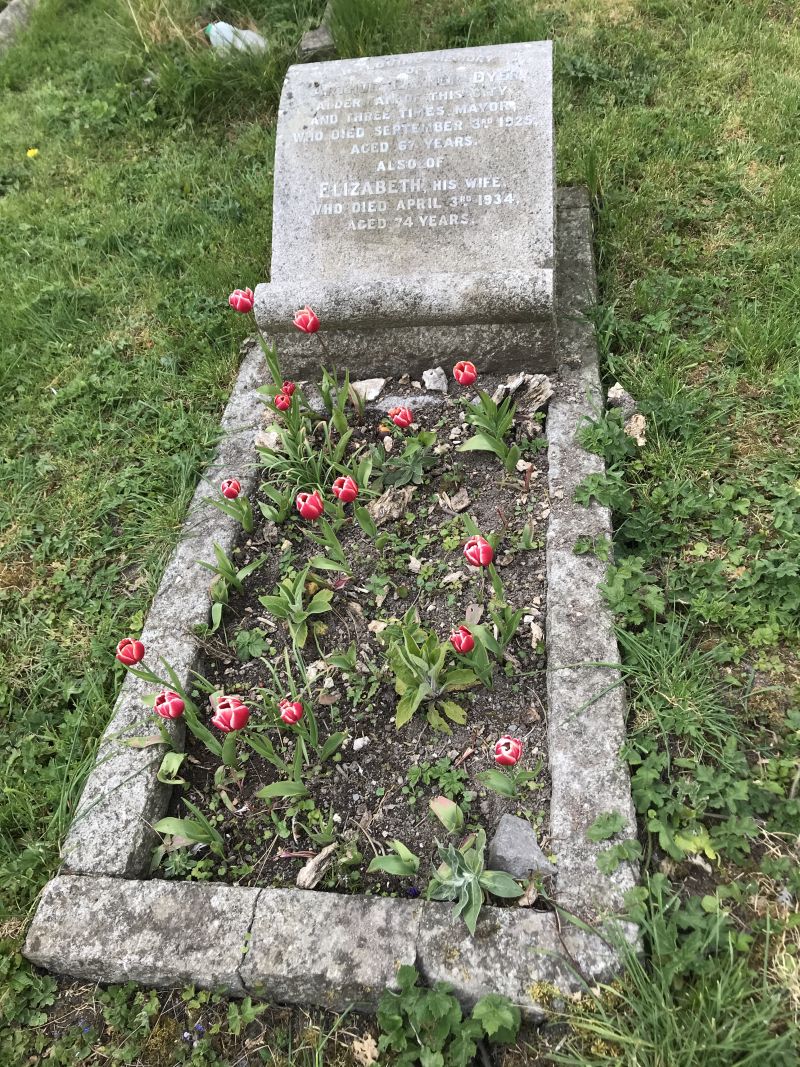
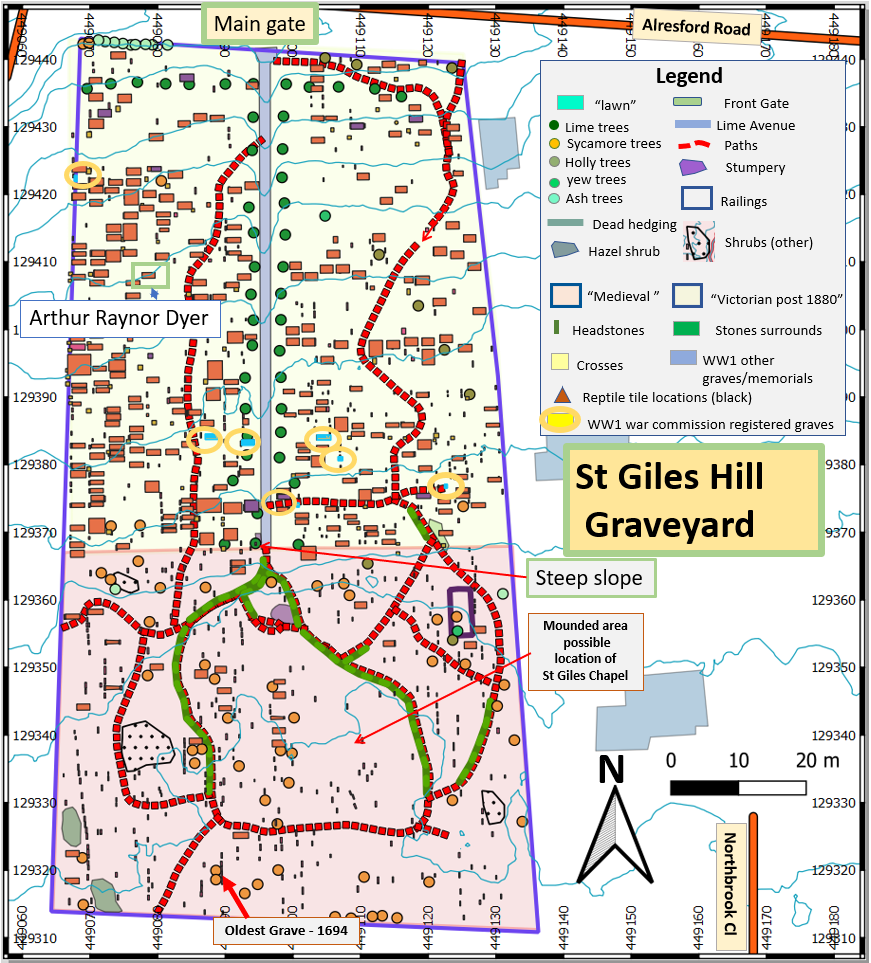
He was buried in St Giles Hill Cemetery, Winchester, close to the Alresford Road gate.
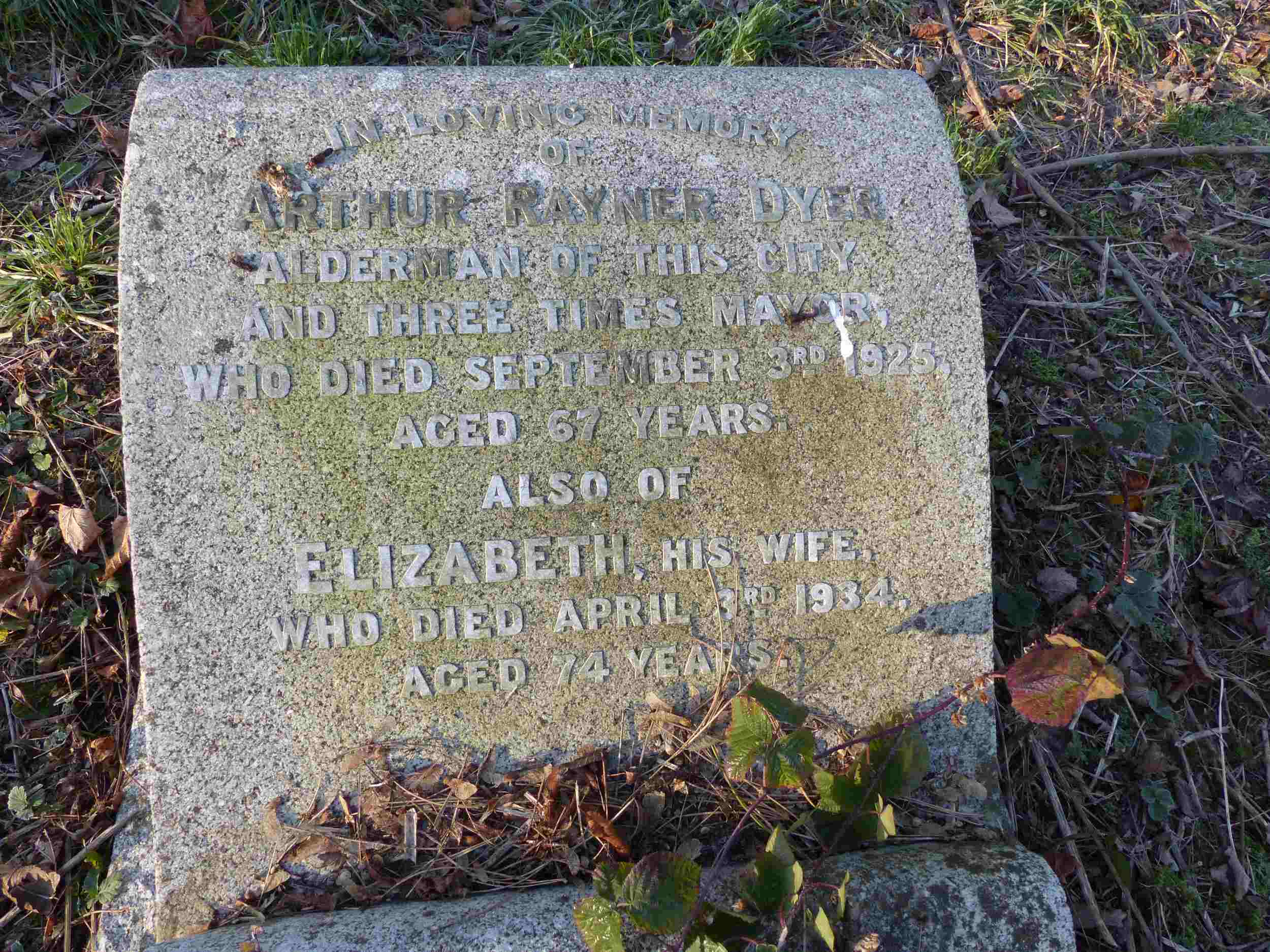
His grave is marked by a substantial granite monument shared with his wife, Elizabeth.
The inscription reads:
“Arthur Rayner Dyer, Alderman of this City and three times Mayor, died September 3rd 1925, aged 67 years.”
“Elizabeth, his wife, died April 3rd 1934, aged 74 years.”
The slight discrepancy between the probate date (2 September) and the memorial inscription (3 September)
likely reflects the difference between the date of death and the date recorded or remembered when the
stone was commissioned.
Authur Rayner Dyer memorial location.
Significance:
Arthur Rayner Dyer is notable as one of the few Winchester mayors to serve three consecutive terms, guiding the city through the immediate post‑war transition after 1918. His career links local government, commercial life, and the wider imperial context of the First World War through his son’s service overseas. His prominent memorial in St Giles Hill Cemetery, and the family’s long residence on the hill, make the Dyers an important part of the area’s civic and social history.