NATURE
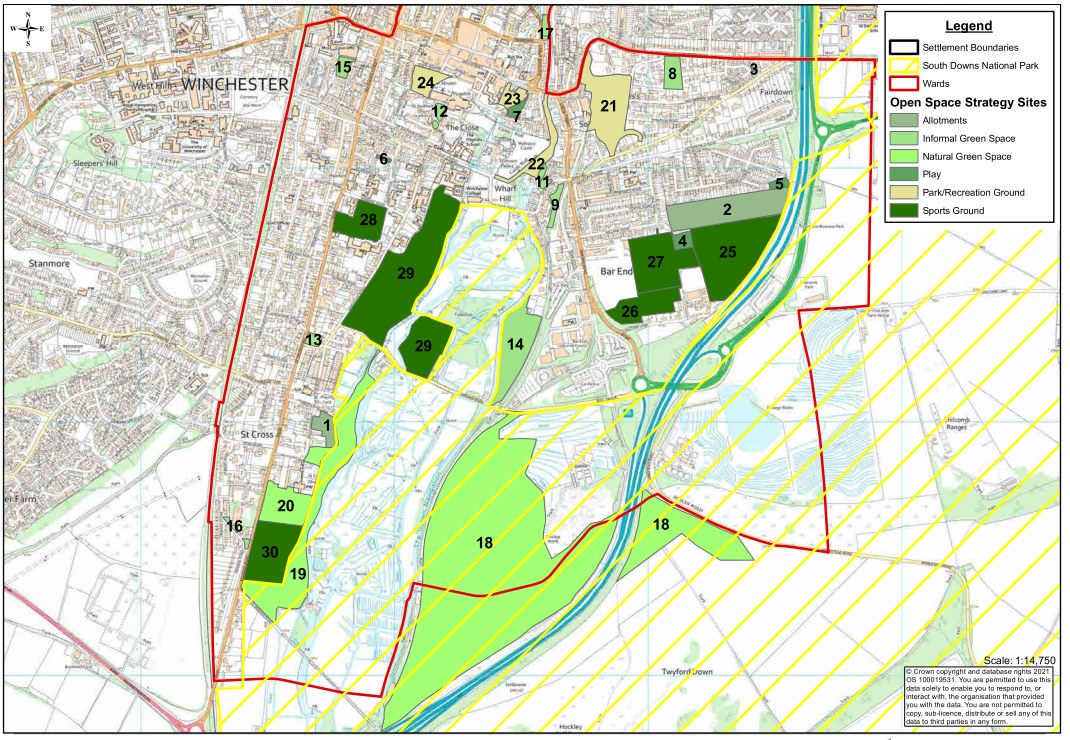
St Giles Hill Graveyard is part of Winchester's green infrastructure, comprising a mosaic of natural and manmade green spaces that help to create connected wildlife corridors and better places for people to live. The graveyard sits neatly between Magdalen Hill Down, St Giles Hill Park and St Catherine’s Hill, and Winnall Moors wildlife reserve. St Giles Hill Graveyard is no. 8 on the map below, taken from the Winchester City Council Biodiversity Action Plan (2023).
The aim of our group is to increase the biodiversity of the site for the benefit of wildlife and the community. We are keen to promote the development of wildflower meadows and in the wooded areas, shade-loving grasses and wild flowers. This is attracting pollinators, including a range of butterflies.
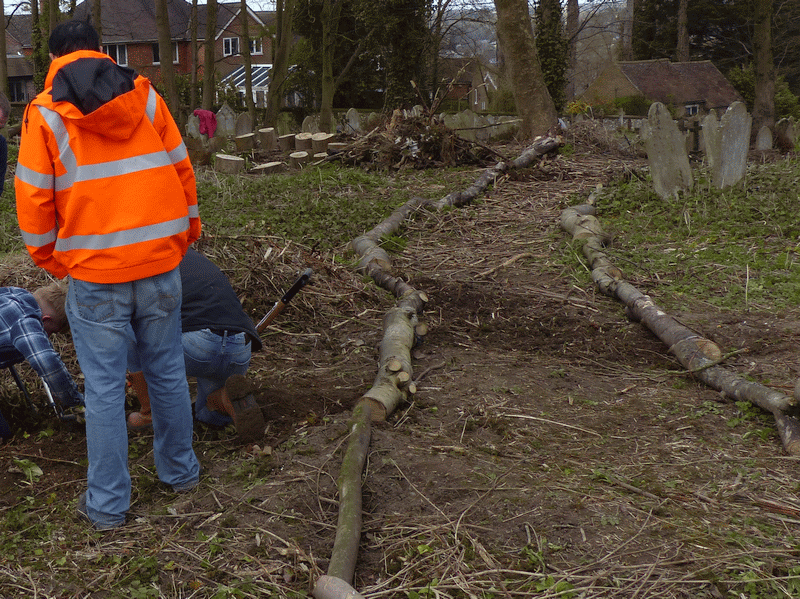
Walking around the graveyard, you will see that over a 10-year period we have created log piles and dead hedges are of massive importance to mammals, birds and insects). They offer nesting places for wrens, homes for hedgehogs and wood mice, beetles and solitary bees as well as woodlice, snails.
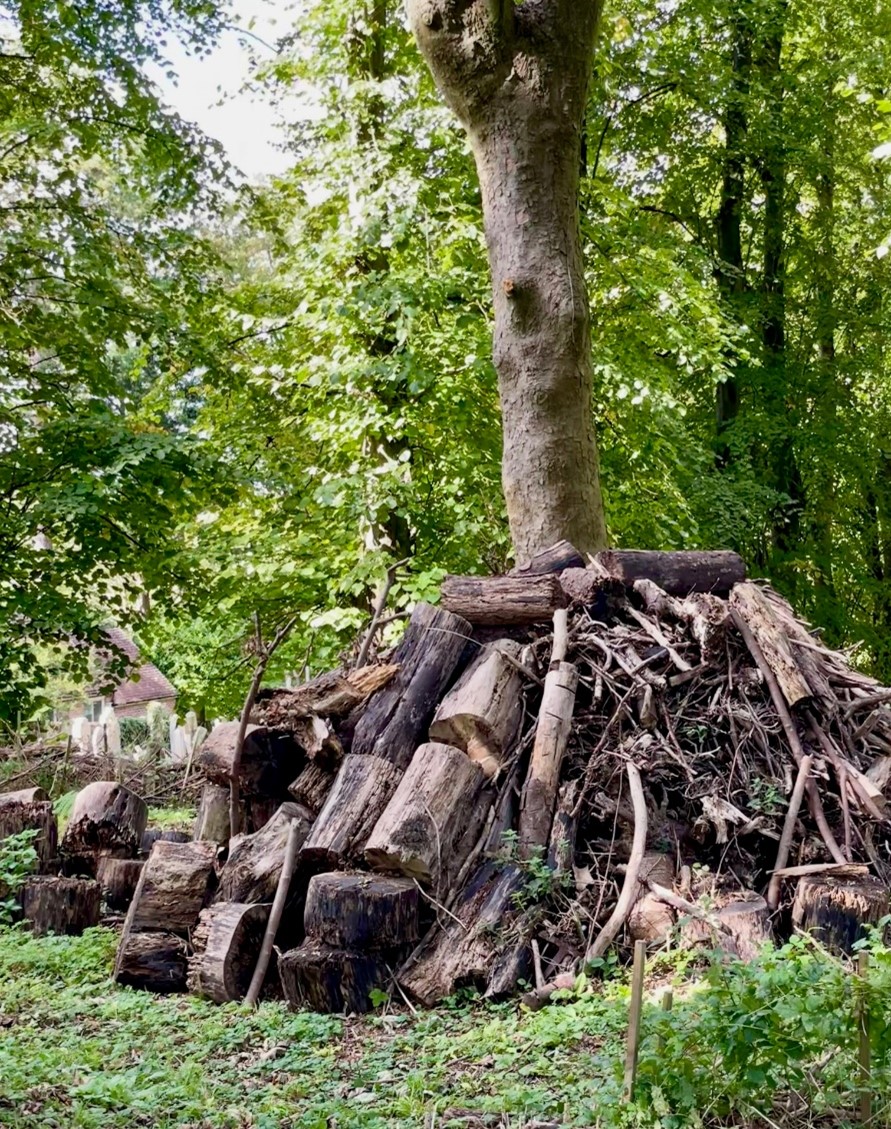
The main stumpery forms a prominent feature close to the gabion meeting point. This location was chosen because it is shady and damp. Many of the logs are stacked vertically to encourage Stag beetles. Most of the wood is broad-leaved Sycamore, which has rotted over the year,s providing a good habitat for the beetle larvae which live underground for several years before emerging.
Although the trees of the graveyard are home to many birds, we have added several bird boxes aimed at the smaller birds.
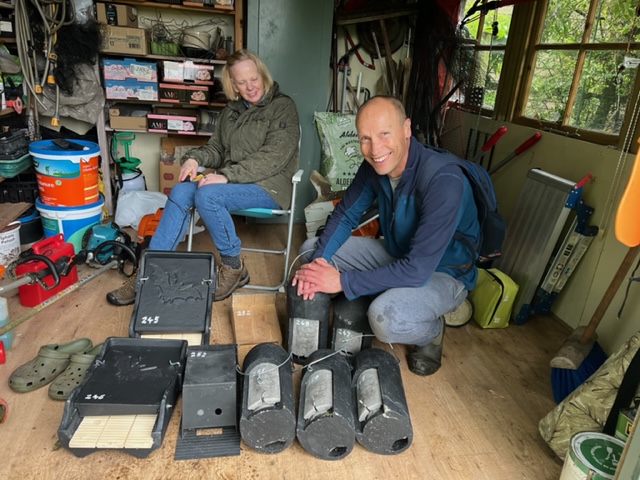
Several bat boxes have been mounted on the trees in the graveyard. These augment the natural roasting sites provided by the trees and help to alleviate the significant pressure on bats, particularly in the urban area. The photo shows the bat boxes before deployment.
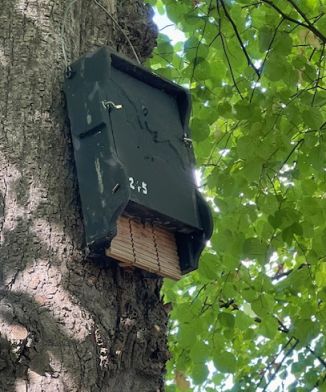
Bat Box
The bat boxes were mounted and are monitored by the Hampshire Bat Group. Six of the boxes were manufactured by Schwegler from woodcrete that has been painted black so it absorbs warmth. Four boxes are general-purpose models (Schwegler 2FN), and two boxes model (Schwegler 1FF), which are designed for the bats to use as summer roosts or nursery creche.